Mercor: A Practical Guide for Indian Developers, Founders, and Hiring Teams
What it is, how it works, and how Indian talent can benefit
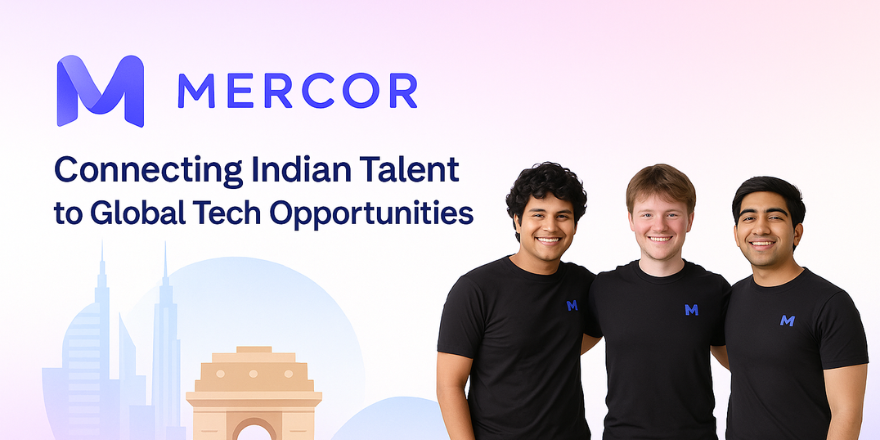
Mercor is often described as a hiring and opportunity platform in tech. Here’s a clear, no-nonsense guide for Indian developers, founders, and recruiters looking to understand its value.
Key Highlights
- What Mercor is and who it serves
- How Indian developers can set up a standout profile
- What founders/recruiters should prepare before posting roles
What is Mercor?
In simple terms, Mercor is positioned as a platform that helps connect software talent with companies looking to hire for full-time roles, contract gigs, or trial projects. Think of it as a place where developers, data folks, and product-adjacent talent can be discovered by startups and scaleups—often with a focus on modern stacks and fast-moving teams.
The exact feature set can evolve, but common goals are: reduce hiring friction, showcase real skills, and speed up matching between roles and candidates.
Who is Mercor for?
- Developers & engineers (India): Backend, frontend, full-stack, mobile, data/ML, DevOps, and platform engineers who want global roles or high-quality domestic opportunities.
- Founders & hiring managers: Startups needing vetted candidates quickly, often for product accelerations or new feature pods.
- Recruiters: Teams seeking a pipeline of niche skills without sifting through generic job boards.
How it typically works
- Candidate profiles: Developers create a profile with projects, skills, links (GitHub, portfolio), and preferences (remote/on-site, time zones, compensation bands).
- Discovery/matching: Companies search and shortlist based on role requirements and tech stacks.
- Assessments/screens: Some roles may use coding tasks, project reviews, or live technical rounds.
- Offer & onboarding: Once matched, the company and candidate complete paperwork and move to onboarding.
Tip: Even when assessments are optional, a strong project portfolio with real code and context usually speeds up decisions.
Benefits for Indian talent & teams
- Access to global roles: Many startups hire remotely, opening doors for Indian engineers beyond local listings.
- Signal over noise: Profiles that show outcomes (not just stack logos) stand out quickly.
- Speed: Lean teams need fast hires—clear profiles and good repos → faster responses.
- Learning curve: Global exposure often means better engineering practices, product thinking, and documentation habits.
Profile blueprint for developers (India)
What to include
- Project snapshots with context: 2–4 flagship projects. For each: the problem, your role, the stack, the impact (metrics if possible).
- Live links: GitHub (pin best repos), site demos, case studies, and short videos (1–2 min walkthrough).
- Tech focus: Be specific (e.g., “Laravel 10 + MySQL + Redis + Horizon” or “React 18 + Zustand + Vite + Tailwind”).
- Career preferences: Full-time/contract, INR/USD bands, time zone overlap, notice period, remote/on-site preference.
- Quality signals: Unit/integration tests, CI, meaningful READMEs, performance notes, security basics.
Common pitfalls to avoid
- Generic buzzwords without proof.
- Private portfolios (no one can verify your craft).
- Typos in READMEs or profile—hurts trust fast.
Hiring checklist for founders/recruiters
- Role clarity: Outcome-based JD (what will this person ship in 30/60/90 days?).
- Stack must-haves: Rank skills as mandatory / nice-to-have.
- Assessment plan: One focused task or code walk-through (90–120 minutes max).
- Interview loop: Limit to 2–3 steps; share timelines upfront.
- Offer & comp bands: Share base, bonus/ESOP (if any), benefits, currency, and payment rails.
Pay, compliance & paperwork (quick notes)
For India-based candidates hired by foreign entities, clarify whether the engagement is employment or contracting. Payroll, taxes, PF/ESI (if applicable), and invoicing rules differ. For cross-border scenarios, agree on:
- Contract type: Employment vs contractor (and conversion path, if any).
- Currency & rails: INR vs USD; bank transfer vs platforms; invoicing cadence.
- IP & confidentiality: NDAs, IP assignment, and open-source policy if relevant.
This section is informational—always consult a qualified professional for legal or tax advice.
FAQs
Is Mercor only for senior engineers?
Not necessarily. Early-career engineers can stand out with solid projects, clean repos, and focused skill stories.
Can Indian developers get fully remote roles?
Yes—many teams are remote-first. Make sure you list your time-zone overlap and communication preferences.
What helps the most in shortlisting?
Clear outcomes, linked demos, concise READMEs, and code quality signals (tests, CI, performance notes).
What should founders include in a JD?
A crisp problem statement, success metrics, stack expectations, and a realistic interview plan with timelines.
The bottom line
Platforms like Mercor thrive when both sides respect time and clarity. If you’re a developer in India, lead with outcomes and code you’re proud of. If you’re hiring, share the real job, not a wishlist. That’s how great matches happen—fast.